Outdoor Education

Escape the confines of urban centers. Build real-world resilience, master elite survival techniques, connect profoundly with nature, and discover your true potential.

Explore Course Requirements
Course Description

This course is designed to deepen and expand on the skills necessary to plan, participate in, and enjoy adventures that take place away from urban centers. A connectedness with nature and the ability to make choices for a sustainable future will be some of the underlying themes of the course.

Students will gain skills in camping, safety, navigation, route selection, equipment use, equipment maintenance, as well as gain interpersonal skills as they work with their peers to meet individual and group goals. Personal growth will be achieved as students are pushed to their limits both physically and mentally.
Safe
Respectful
Learning
FUN
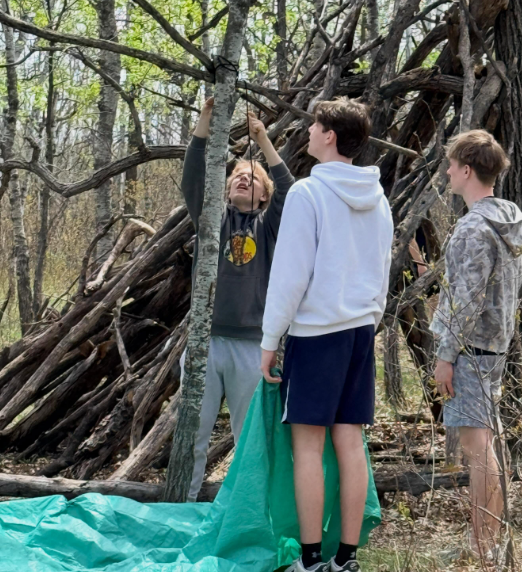
Setting up campsite tarps
Major Course Topics

Syllabus structural timelines mapped out chronologically by institutional focus blocks:

Core Educational Focus Approximate Classes
Winter Activities20 Classes
Outdoor Survival20 Classes
Sustainable Wildlife Management20 Classes
Backpacking / Hiking15 Classes
Orienteering15 Classes
Paddling & Water Safety10 Classes
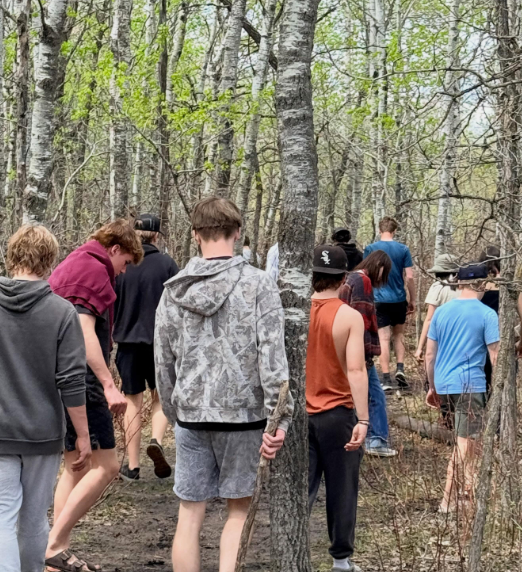
Students hiking on trail
Winter Activities & Survival Focus

Core competencies and survival requirements evaluated during the freeze semester blocks. Students build hands-on mastery over severe environments:

Winter Survival & Shelter
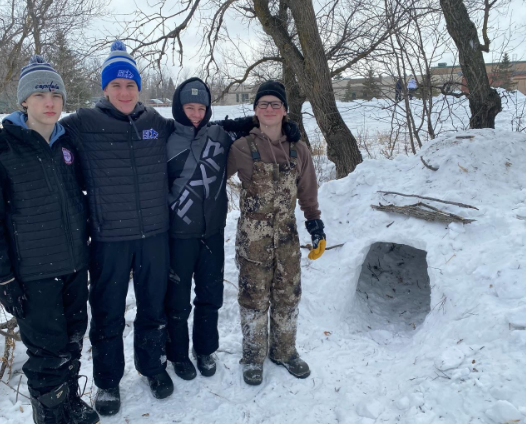
Successfully make a quinzee during the winter time
Shelters- wood, snow, and man made (tents)
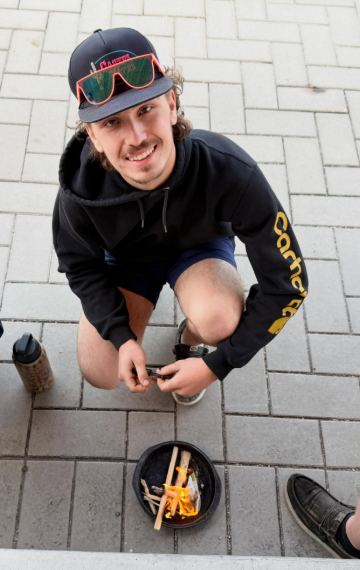
Individually start a fire USING FLINT
Show different signalling methods
Weather: predictions and safe decisions
Basic Wilderness First Aid knowledge
Winter Gear & Punctuality
Contextually prepared for current winter weather elements (winter wear, rugged boots)
Gear maintenance under freezing conditions
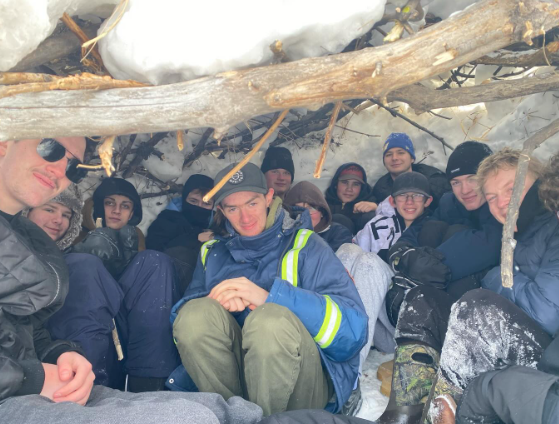
Students by completed snow quinzee
Winter Infrastructure & Safety

A heavy emphasis of our cold-weather syllabus focuses on teamwork and group coordination inside primitive structures. Building proper ventilation networks, packing density limits, and managing personal thermal boundaries are vital components of the winter survival module.

Students participate in active, real-time emergencies simulating sudden drops in temperatures and structural adjustments, ensuring complete comfort and confidence on ice fields before any major field trip commences.

Class packed inside outdoor shelter
Summer & Fall Focus

Core competencies, alternative outdoor pursuits, and regional ecological tracking evaluated during temperate seasonal blocks:

General Camping & Excursions
Planning a nutritious diet for a multi-day excursion
Forms of water purification
Appropriate packing for a trip
Knots and ropes
Individually be able to set-up a tent in under 15 minutes
Fecal management in the outdoors
Animal awareness and safety
Navigation & Mapping
Reading U.T.M. TOPO maps
Using a compass along with a topo map
Gathering appropriate maps / information for a route
Orienteering & landmarking
Man kneeling, practicing individual fire starting using flint
Environment & Alternative Pursuits
Wildlife Management & Sustainability
Leave no trace camping practices
Respect for the natural environment & shared spaces
Able to demonstrate understanding of hunting & fishing seasons
Able to demonstrate knowledge of legal limits & sizes of fish caught
Learn how hunting impacts animal populations
Alternative Pursuits & Leadership
Fishing identification and catching technique
Canoe / kayak / paddling knowledge and safety
Taking leadership action to help achieve group goals
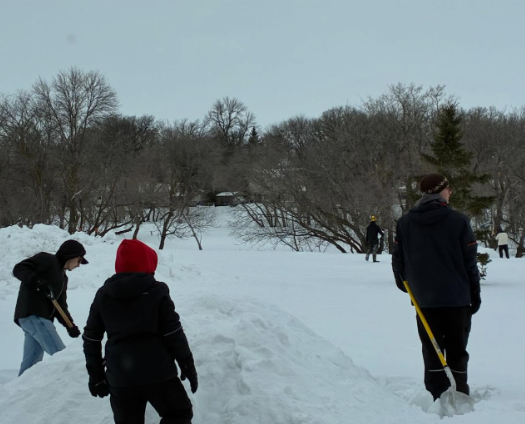
Shoveling snow mounds for winter shelters
Mandatory Outings

Students must cover fees associated with these 3 mandatory wilderness trips. Fundraising tools are provided to completely subsidize all individual costs.

Wilderness First Aid $60
Early March • Sanford Collegiate
Ice Fishing Derby $20
Mid March • Balsam Bay
Fort Whyte Field Trip $30
Early May • Fort Whyte
Course Expectations

Punctuality & Gear: Be ready to go outside during any given class. Students who are not contextually prepared for current weather elements will receive an unexcused absence.

Tool Responsibility: Throughout this course, students handle utility tools for carving shelters and processing natural elements. Safety awareness is strictly non-negotiable.

Property Upkeep: If gear is intentionally broken outside regular environmental stress, students are financially responsible for component replacement.
Questions or Concerns?

Contact Instructor: Garrett Jones

gjones@rrvsd.ca